A Farm, A Ranch, A Refuge – Human Spaces for Wildlife Migrations
by Briana Olson in Edible Fall Magazine – Migrations
The word “environmentalist” might not conjure the picture of a woman driving
a tractor or a cowboy driving cattle or a figure in camouflage,
crouched in the predawn light, but farmers, ranchers, and hunters
have contributed land and labor to form and manage protected spaces
throughout the West. Also, hunting stamps and tags are an important
source of revenue for state conservation efforts.
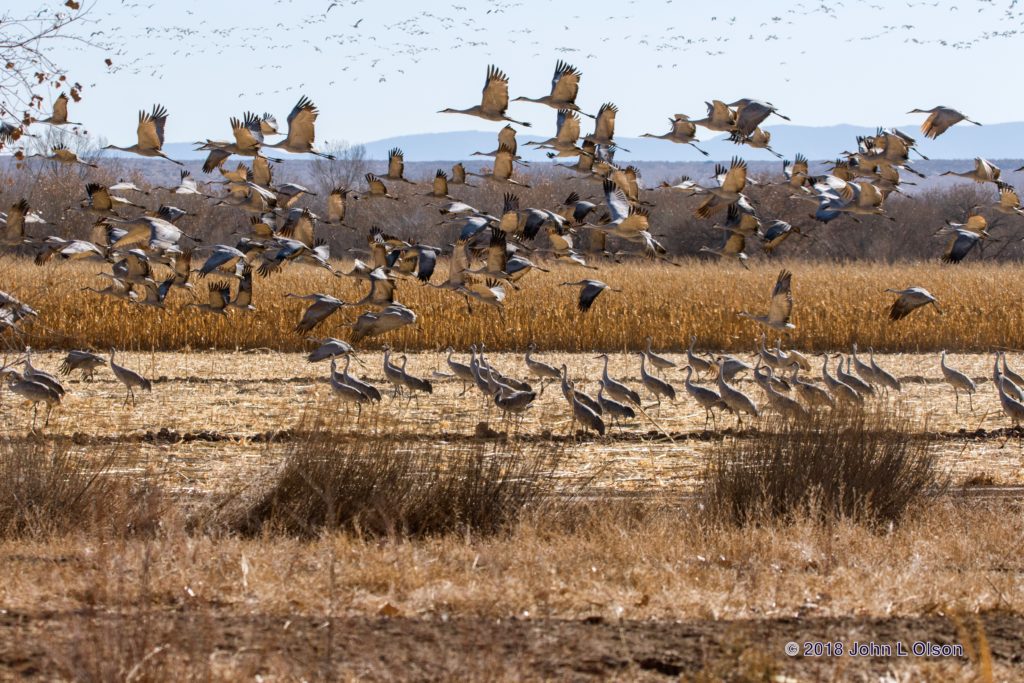
“This striving for balance—mimicking vanished wetlands while protecting
the economic viability of neighboring farms—is the norm,
not the exception, when it comes to wildlife conservation.”
RGALT has worked with private landowners along the middle Rio Grande corridor to place conservation easements on their working lands, preventing thousands of acres from development and loss of water rights. These protected farms and ranches are for humans and wildlife.